

Obtaining a green card entered US illegally is possible under federal immigration law, though the path requires specific waivers or family petitions rather than standard processing. Many immigrants who arrived without inspection fear that their prior entry permanently closes the door to legal residency. Statutory exceptions create real opportunities through a U.S. citizen spouse, humanitarian waivers, or specialized military family programs. Understanding your options for a green card entered US illegally is the first step toward building a secure future for your family.
What It Means to Enter Without Inspection
When someone crosses the border without going through an official port of entry, federal law calls this entry without inspection. This distinction matters because it affects which immigration pathways are available to you. People who enter with a valid visa and overstay have different options than those who entered without any inspection at all.
I know what this feels like because my mother and I made our own journey from Monterrey, Mexico. We experienced the constant weight of immigration rules and the fear that one mistake could change everything. Our team at Zavala Immigration Law Firm helps Houston families understand exactly where they stand under current law.
How Entry Without Inspection Affects Your Immigration Options
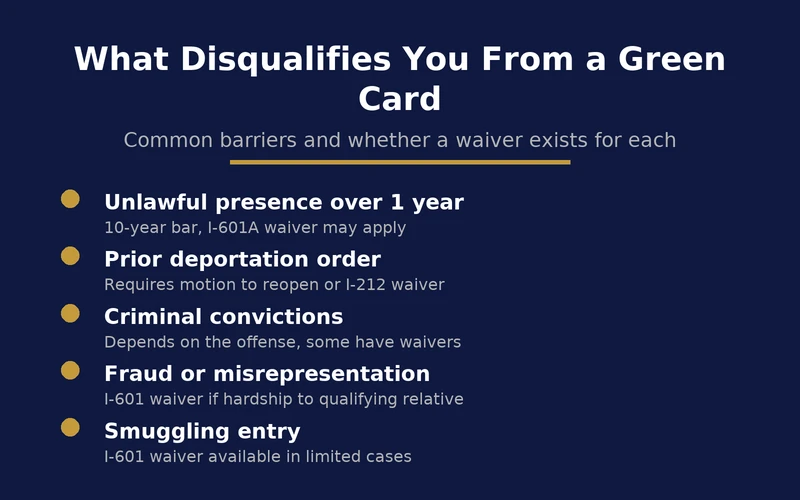
Under federal immigration statutes, individuals who entered without inspection generally cannot apply for adjustment of status inside the United States. This means they must leave the country for an immigrant visa interview at a U.S. embassy abroad. However, departing after accruing unlawful presence triggers a 3-year or 10-year bar to reentry.
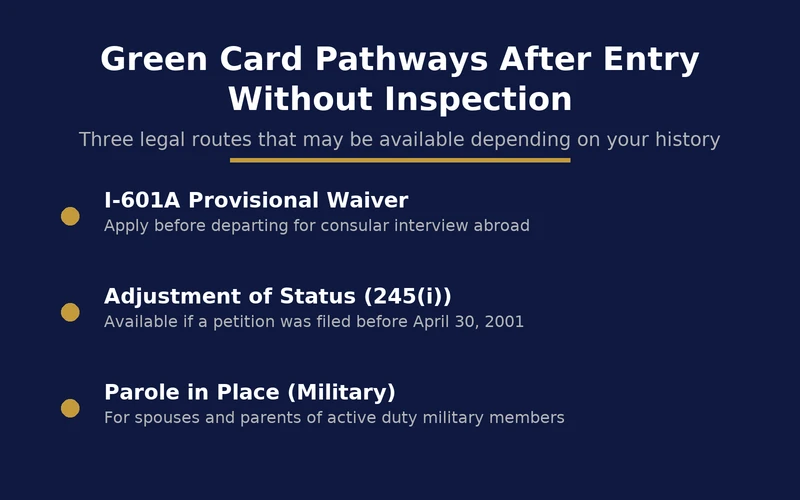
This is the central challenge for anyone seeking a green card entered US illegally through a green card entered US illegally through normal channels. The law creates a catch-22 where leaving to get your visa triggers a penalty for having stayed. Fortunately, the I-601A waiver process solves this problem by letting eligible applicants apply for a waiver before departing.
The Difference Between Entry Without Inspection and Overstaying a Visa
People who entered with a valid visa but stayed past their authorized date have a significant advantage. If they marry a U.S. citizen, they can often adjustment of status without leaving the country. This is because their entry was inspected and documented by border officers.
People who entered without inspection do not have this option unless they qualify under Section 245(i) of the Immigration and Nationality Act. This legacy provision applies if a family member or employer filed a petition on their behalf before April 30, 2001.
- Entry with inspection (visa overstays) can adjust status inside the U.S. if married to a citizen
- Entry without inspection requires consular processing abroad with a waiver
- Section 245(i) protection applies if a petition was filed before April 30, 2001
- Parole in place may help military family members who entered without inspection
Practical rule: Never leave the United States without first consulting an immigration attorney if you entered without inspection. Departing may trigger a 3-year or 10-year bar to reentry.

The I-601A Provisional Waiver Process
The I-601A waiver is the primary pathway for immigrants who entered without inspection to obtain a green card entered US illegally through a U.S. citizen or permanent resident spouse. This provisional waiver allows you to apply for forgiveness of your unlawful presence while remaining in the United States, before you depart for your consular interview.
Before 2013, immigrants had to leave the country and wait abroad, sometimes for years, while their waiver was processed. The provisional waiver process changed this by letting families stay together during the waiting period. You can learn more about this process on our provisional waiver services page.
Who Qualifies for the Provisional Waiver
To qualify for the provisional waiver, you must have an approved I-130 petition from a U.S. citizen or lawful permanent resident spouse or parent. You must also have an active immigrant visa case with the National Visa Center. The waiver covers only the unlawful presence ground of inadmissibility.
If you have other inadmissibility issues such as criminal convictions or prior fraud, you may need to file a standard I-601 waiver instead. Our team evaluates your complete immigration history to determine which waiver applies to your situation.
Proving Extreme Hardship to a Qualifying Relative
The I-601A waiver requires proving that denying your admission would cause extreme hardship to a qualifying relative. A qualifying relative is a U.S. citizen or lawful permanent resident spouse or parent. U.S. citizen children do not count as qualifying relatives for this waiver, though their impact on the spouse can be considered.
Hardship must exceed the normal emotional and financial strain of family separation. We document medical conditions, financial dependence, country conditions, and psychological evaluations to build a strong case. The key is showing specific, documented evidence rather than general statements about family bonds.
Timeline From Filing to Green Card Approval
The provisional waiver process typically takes 6 to 12 months from filing to approval. After approval, you schedule your consular interview abroad, which adds another 2 to 4 months. The entire process from start to green card in hand usually takes 12 to 18 months.
- File Form I-130 petition (4 to 8 months for approval)
- File Form I-601A provisional waiver (6 to 12 months)
- Schedule consular interview abroad (2 to 4 months after waiver approval)
- Return to U.S. as a lawful permanent resident (within weeks of interview)
Practical rule: The provisional waiver only covers unlawful presence. If you have criminal issues or prior fraud, you need a different waiver strategy.
Special Pathways That Do Not Require Leaving the Country
Some immigrants who entered without inspection can get a green card entered US illegally a green card entered US illegally without ever leaving the United States. These special pathways are limited but worth exploring before committing to consular processing.
Section 245(i) Grandfathering Protection
If a family member or employer filed a visa petition or labor certification for you on or before April 30, 2001, you may qualify under Section 245(i). This provision allows you to adjustment of status inside the United States despite entering without inspection. You pay an additional penalty fee of $1,000, but you never have to leave the country.
Many people do not know that an old petition filed decades ago by a parent or grandparent could unlock this protection today. We check every client’s history for any prior filings that might qualify under this provision. The USCIS adjustment of status page provides official details.
Parole in Place for Military Family Members
If you are the spouse, parent, or child of an active duty military member or veteran, you may qualify for parole in place. This program grants a form of legal entry retroactively, which can open the door to adjustment of status without leaving the country. Our military parole attorney services help Houston military families work through this process.
VAWA Self-Petitions for Survivors of Abuse
Survivors of domestic violence married to U.S. citizens or permanent residents can self-petition under the Violence Against Women Act. VAWA self-petitioners may be eligible for adjustment of status even if they entered without inspection. This pathway provides a safe and confidential way to seek legal status without relying on an abusive spouse.
Practical rule: Always check for Section 245(i) eligibility before pursuing consular processing. An old family petition could save you years of separation.
Common Barriers and How to Address Them
Several barriers can complicate getting a green card entered US illegally. Knowing these obstacles in advance helps you prepare a stronger case and avoid costly mistakes.
Criminal Convictions and Immigration Consequences
Certain criminal convictions can make you inadmissible or disqualify you from waiver eligibility. Not all convictions have the same impact. Misdemeanor traffic offenses usually do not affect immigration, while felony convictions can permanently bar you from obtaining residency. We review your criminal record to determine whether a waiver or other relief is available.
Prior Deportation Orders
If you have a prior order of removal, you face additional barriers beyond unlawful presence. You may need to file a motion to reopen your case or apply for permission to reapply for admission using Form I-212. Our deportation defense team handles these detailed situations regularly.
Multiple Entries Without Inspection
Multiple illegal entries can trigger a permanent bar under federal law. If you were apprehended and removed and then re-entered without permission, you face a 10-year or permanent bar. This situation requires specialized legal analysis and potentially an I-212 waiver.

The Houston Immigration Experience
Houston has one of the largest immigrant populations in the United States. Many families in our community entered without inspection decades ago and have built lives, raised children, and contributed to the city. The East Freeway and Greenspoint neighborhoods are home to thousands of families working through these exact immigration challenges.
Working With a Local Houston Immigration Attorney
Having an attorney who understands the Houston immigration community makes a real difference. We know the local USCIS field office procedures, the Houston immigration court system, and the specific challenges facing our community. Working with family immigration specialists means your case gets personal attention.
Accessing Community Resources in Houston
Houston has several community organizations that support immigrant families. The USCIS processing times page and the USCIS field office in Houston processes applications for families across the metropolitan area. Knowing where to get help with immigration questions can reduce anxiety and prevent costly mistakes.
Practical rule: Community organizations can provide information, but only a licensed immigration attorney can give legal advice specific to your case.
Building Your Green Card Case Step by Step
Every green card entered US illegally case follows a specific sequence. Understanding the steps helps you prepare and reduces the anxiety of the unknown.
| Step | What Happens | How Long It Takes |
|---|---|---|
| 1. Consultation | Attorney reviews your immigration history, family ties, and eligibility | 1 to 2 weeks |
| 2. I-130 Filing | Family member files immigrant visa petition with USCIS | 4 to 8 months |
| 3. NVC Processing | National Visa Center processes case and sends fee bills | 2 to 3 months |
| 4. I-601A Filing | File provisional waiver while remaining in the U.S. | 6 to 12 months |
| 5. Consular Interview | Travel abroad for embassy interview with waiver in hand | 2 to 4 weeks abroad |
| 6. Green Card | Return to U.S. as a lawful permanent resident | 2 to 4 weeks after interview |
How Marriage to a U.S. Citizen Changes Your Options
Marrying a U.S. citizen is one of the most common pathways to a green card entered US illegally. When a U.S. citizen marries someone who entered without inspection, the citizen spouse can file an I-130 petition to establish the family relationship. However, the process after that point depends entirely on how the immigrant entered the country.
If you entered with a valid visa and overstayed, you can usually adjustment of status inside the United States without leaving. If you entered without inspection, you must go through consular processing abroad, which means you need an I-601A waiver to avoid the 3-year or 10-year bar.
Proving a Good Faith Marriage to USCIS
USCIS scrutinizes marriage-based green card applications to ensure the marriage is genuine and not entered solely for immigration benefits. You must provide evidence of a shared life, including joint bank accounts, lease agreements, photos together, and affidavits from friends and family. The USCIS marriage green card page outlines the specific documentation required.
For couples where one spouse entered without inspection, the process is more involved. The couple must prove both the good faith marriage and the extreme hardship that would result if the immigrant spouse were denied admission. This dual burden requires thorough documentation on both fronts.
The Adjustment of Status Interview
If you qualify for adjustment of status inside the United States, you and your spouse will attend an interview at the Houston USCIS field office. The officer will ask questions about your relationship, living arrangements, and daily life together. If your case involves a waiver, the officer may also ask about the hardship your spouse would face.
For consular processing cases, the interview takes place at the U.S. embassy in your country of nationality. Having an approved provisional waiver before this interview means the unlawful presence issue is already resolved, making the interview smoother.
Practical rule: A marriage green card through consular processing requires an approved I-601A waiver if you entered without inspection. Never schedule your embassy interview before your waiver is approved.
Protecting Yourself From Immigration Fraud
Immigrants seeking a green card entered US illegally are often targeted by notarios and fraudulent immigration consultants. In many Latin American countries, a notario publico is a licensed attorney, but in the United States, a notary public is not an attorney. This difference has led to devastating cases where immigrants paid thousands of dollars to someone who was not qualified to handle their case.
How to Verify an Attorney Is Licensed
Every licensed attorney in Texas is registered with the State Bar of Texas. You can verify any attorney’s license status by searching the Texas State Bar website. Our team at Zavala Immigration Law Firm is fully licensed and in good standing.
Warning Signs of Immigration Fraud
Be cautious of anyone who guarantees a specific outcome, charges unusually low fees, or refuses to provide a written contract. Immigration law is too detailed for anyone to guarantee results. If something sounds too good to be true, it probably is. Working with a licensed family immigration attorney protects you from fraud and gives you a real chance at success.
- Anyone who guarantees a green card approval is not being honest with you
- Notarios and immigration consultants cannot represent you before USCIS
- Always verify an attorney’s license through the Texas State Bar
- Get every fee and service agreement in writing before paying
- Never sign blank forms or forms you do not understand
Frequently Asked Questions About Green Cards After Entry Without Inspection
| Question | Answer |
|---|---|
| Can I get a green card entered US illegally if I marry a U.S. citizen? | Yes, but you will likely need an I-601A waiver and must process through a U.S. embassy abroad unless you qualify under Section 245(i) or another special program. |
| Does having U.S. citizen children help my case? | Children cannot serve as qualifying relatives for the provisional waiver, but their needs can strengthen the hardship argument for your spouse. |
| What if I entered multiple times without inspection? | Multiple entries can trigger a permanent bar. You need an experienced attorney to evaluate whether an I-212 waiver or other relief is available. |
| Can I work while my I-601A waiver is pending? | You cannot get a work permit solely through the pending waiver. If you have DACA or another valid work authorization, you can continue working. |
| How long does the entire process take? | From filing the I-130 to receiving your green card, the process typically takes 12 to 18 months depending on processing times and embassy availability. |
| What happens if my waiver is denied? | You can appeal or refile with additional evidence. A denial does not mean the end of your case, but you should not depart without an approved waiver. |
| Do I need to return to my country of birth for the interview? | Yes, consular processing requires you to attend the interview at the U.S. embassy in your country of nationality. |
Securing Your Family’s Future in Houston
Getting a green card entered US illegally requires patience, documentation, and experienced legal guidance, documentation, and experienced legal guidance. The process for a green card entered US illegally is not simple, but thousands of Houston families have successfully work throughd it. Call our team about your green card entered US illegally case at (713) 974-8284 or visit our contact page to schedule your consultation. Zavala Immigration Law Firm is here to help you build a secure future.
About Eliud Zavala, Eliud Zavala is the founder of Zavala Immigration Law Firm in Houston, Texas. Having immigrated to the United States with his mother from Monterrey, Mexico, Eliud understands the emotional and legal struggles immigrant families experience. He built his practice around serving the Houston immigrant community, guiding individuals and families through family-based immigration, marriage green cards, provisional waivers, deportation defense, and citizenship.