

Family immigration is built on a single principle — that U.S. citizens and lawful permanent residents should be able to reunite with their closest relatives in the United States. The legal process to make that happen is detailed, document-intensive, and can take anywhere from several months to several years depending on the visa category involved. At Zavala Law Firm, PLLC, attorney Eliud Zavala has helped hundreds of Houston families navigate family-based immigration petitions from the initial I-130 filing through adjustment of status or consular processing.
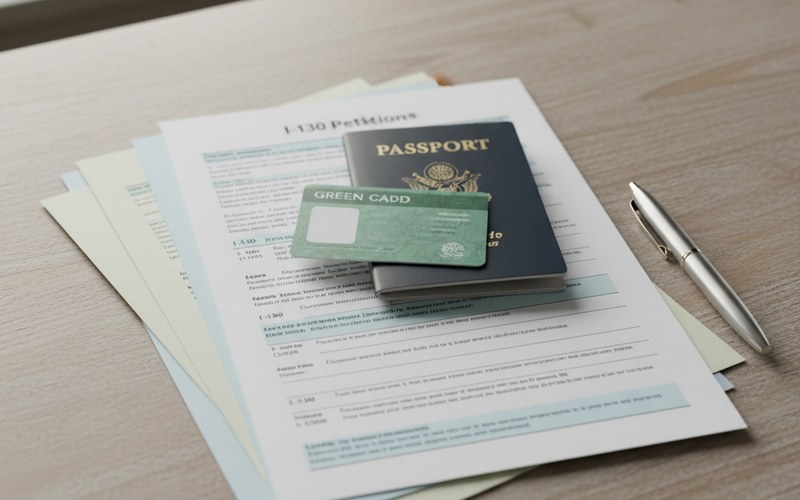
Who Can You Petition For?
U.S. citizens and lawful permanent residents (LPRs) can petition for different categories of relatives, and the rules are not the same for both. Understanding which category applies to your family determines how long the process will take and what visa pathway is available.
Immediate Relatives of U.S. Citizens
Immediate relatives receive the fastest processing because there is no annual cap on these visas. Immediate relatives include:
- Spouses of U.S. citizens
- Unmarried children under 21 of U.S. citizens
- Parents of U.S. citizens (petitioner must be 21 or older)
Because no visa number is required, immediate relative petitions can move directly to adjustment of status or consular processing once the I-130 is approved — without waiting for a priority date to become current.
Family Preference Categories
For relatives who are not immediate relatives, the family-based immigration system uses a preference category system with annual visa caps. This creates waiting periods — sometimes measured in years — based on the petitioner’s status and the family relationship. The monthly State Department Visa Bulletin tracks when each category’s priority dates become current:
| Category | Who Qualifies | Typical Wait |
|---|---|---|
| F1 | Unmarried adult children (21+) of U.S. citizens | 5–8+ years |
| F2A | Spouses and minor children of LPRs | 2–4 years |
| F2B | Unmarried adult children of LPRs | 6–10+ years |
| F3 | Married children of U.S. citizens | 10–15+ years |
| F4 | Siblings of U.S. citizens | 15–25+ years |
Wait times vary significantly based on your country of origin. Nationals of Mexico face some of the longest backlogs in the preference categories due to per-country caps imposed by USCIS visa availability rules.
Practical rule: Filing the I-130 as early as possible establishes your priority date — the earlier you file, the earlier your place in line. Waiting until your relative is ready to move does not help. File now.
The Family Immigration Process Step by Step
Understanding what to expect at each stage helps families plan realistically for the timeline and documentation involved in family immigration.
Step 1: File Form I-130 (Petition for Alien Relative)
The U.S. citizen or LPR petitioner files Form I-130 with USCIS to establish the qualifying family relationship. Supporting documents include proof of citizenship or LPR status, proof of the relationship (marriage certificate, birth certificate), and identity documents. USCIS will issue a receipt notice and eventually an approval notice.
Step 2: Wait for a Visa Number to Become Available
For immediate relatives, this step does not apply — a visa number is always available. For preference categories, you must wait until your priority date is current on the State Department Visa Bulletin, published monthly. Mexican nationals in particular should track their priority dates closely, as backlogs in Mexico are among the longest in the world.
Step 3: Adjustment of Status or Consular Processing
If your relative is already in the U.S., they may be eligible to adjust status by filing Form I-485 without leaving the country. If they are outside the U.S., the case goes through consular processing at a U.S. embassy or consulate in their home country. Each pathway has different documentation requirements and timelines.
Step 4: Medical Exam, Biometrics, and Interview
Applicants must complete a medical examination by a USCIS-approved civil surgeon, submit biometrics, and attend an interview — either at a USCIS field office (adjustment of status) or at the U.S. consulate (consular processing). The USCIS Form I-693 medical examination must be completed by a designated civil surgeon and sealed before submission.
Step 5: Green Card Approval
Once approved, your relative receives a green card granting lawful permanent resident status. Conditional green cards are issued for certain spousal cases and must be removed after two years by filing Form I-751.
Practical rule: Adjustment of status is generally faster and less disruptive than consular processing — but it is only available if your relative is already in the U.S. and entered lawfully. Entry without inspection creates barriers that require a separate waiver process.
K-1 Fiancé Visas
If you are a U.S. citizen engaged to a foreign national, the K-1 visa allows your fiancé to enter the United States for the purpose of getting married. The marriage must occur within 90 days of entry. After the marriage, your spouse can apply for adjustment of status to a green card. The K-1 process typically takes 8–12 months from petition to visa issuance. Attorney Zavala handles K-1 petitions for Houston couples and advises on the specific documentation requirements for different countries of origin.
What If Your Relative Entered Without a Visa?
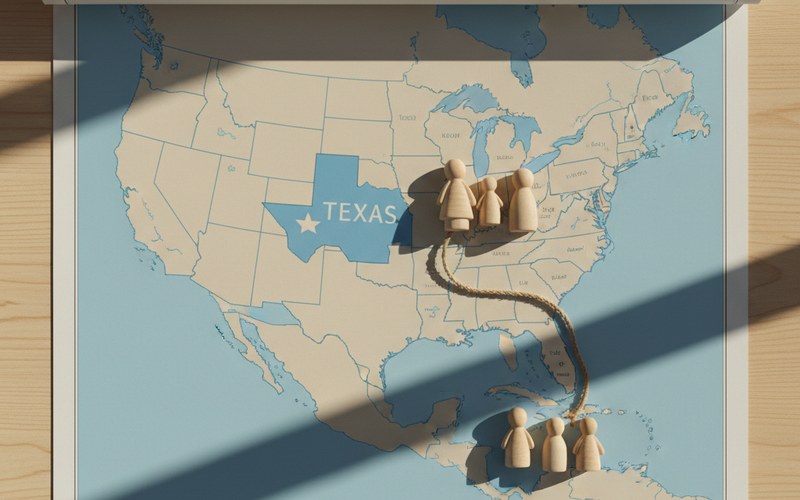
This is one of the most common situations in Houston’s immigrant community and one of the most misunderstood. If your relative entered the U.S. without inspection — crossing the border without a visa — they generally cannot adjust status inside the United States even if they have a qualifying immediate relative petition. The standard pathway requires departing the U.S. for consular processing, but that departure triggers the 3-year or 10-year unlawful presence bar under INA Section 212(a)(9)(B).
The provisional unlawful presence waiver (Form I-601A) was created specifically to address this situation. It allows eligible applicants to apply for a waiver of the bar before departing, reducing the time they must spend outside the U.S. to complete the process. Qualifying requires demonstrating extreme hardship to a U.S. citizen or LPR spouse or parent. Attorney Zavala handles I-601A waiver cases and knows exactly what USCIS expects to see in extreme hardship documentation.
Spousal Visas — CR-1 and IR-1
If you are a U.S. citizen and your spouse is outside the United States, the CR-1 (conditional resident) or IR-1 (immediate relative) visa brings them to the U.S. as a lawful permanent resident. The IR-1 applies if you have been married more than two years; the CR-1 applies if married less than two years and results in a conditional green card. Both require filing the I-130, completing the National Visa Center process, and attending a consular interview at the U.S. embassy in your spouse’s country.
Practical rule: If your spouse is in Mexico, the consular interview will be at the U.S. Consulate in Ciudad Juárez. Processing times and requirements at that consulate have specific considerations that a Houston immigration attorney familiar with Mexican national cases will know well.
Common Family Immigration Questions
| Question | Answer |
|---|---|
| Can my undocumented spouse get a green card? | Possibly — it depends on how they entered the U.S. and whether a waiver applies. An attorney needs to evaluate your specific situation. |
| How long does an I-130 take to be approved? | Currently 8–18 months for most categories. Immediate relative cases for spouses tend to move faster than preference categories. |
| Can I petition for my parents? | Yes, if you are a U.S. citizen and 21 or older. Parents are immediate relatives — no waiting period for a visa number. |
| What if my relative has a prior deportation order? | A prior order of removal creates significant complications. An attorney must review the specifics before any petition is filed. |
| Can an LPR petition for a sibling? | No — only U.S. citizens can petition for siblings, under the F4 preference category. This has one of the longest backlogs. |
Houston Family Immigration Attorney Ready to Help
Every family immigration case involves real people waiting to be reunited. At Zavala Law Firm, PLLC, we take that seriously. Call attorney Eliud Zavala at (713) 766-6720 or visit our contact page to schedule a consultation and find out exactly what your family’s options look like.
About Zavala Law Firm, PLLC: Zavala Law Firm is a Houston-based immigration law firm serving families throughout Harris County, Fort Bend County, and greater Houston. Attorney Eliud Zavala provides bilingual immigration legal services in English and Spanish, with a focus on family petitions, waivers, and reunification cases.