

An ICE encounter in Texas can happen at your front door, your job, a traffic stop, or the parking lot outside a courthouse. How you respond in the first 60 seconds determines whether you go home or get detained. Texas is one of the most active ICE enforcement jurisdictions in the country. The ICE encounter Texas population is not limited to people with criminal records anymore. Civil immigration violations, overstays, and prior removal orders are all active enforcement priorities. Knowing your rights before an encounter happens is not optional. This guide covers what ICE can and cannot do legally, how to respond at your door and on the street, what happens after an arrest, and what to do if a family member is detained.
Practical rule: The moment ICE makes contact, say three things only: “I am exercising my right to remain silent. I want to speak to an attorney. Am I free to go?” Say nothing else. Answer nothing else. Every word after that can be used against you in removal proceedings.

Your Constitutional Rights During an ICE Encounter in Texas
The Fourth and Fifth Amendments apply to everyone in the United States, regardless of immigration status. The ACLU Know Your Rights guide for immigrants is explicit on this point. ICE agents know the law. They count on you not knowing it. Understanding your rights before an ICE encounter in Texas is how you protect yourself and your family in a moment when panic can cause permanent damage.
The Right to Remain Silent
You are not required to answer questions about your name, your birthplace, how you entered the United States, or your current immigration status. You may state: “I am exercising my right to remain silent.” Stop there. The most damaging evidence in Texas deportation cases is almost always a voluntary statement made during the initial ICE encounter before the person realized they could stop talking. ICE officers are trained interviewers. You are not required to participate.
The Right to Refuse Entry Without a Judicial Warrant
You do not have to open your door to ICE without a judicial warrant signed by a federal judge. An administrative warrant, Form I-200 (Warrant for Arrest of Alien) or Form I-205 (Warrant of Removal), is issued by an immigration official, not a judge. It does not authorize entry into your home. Ask through the closed door: “Is that a judicial warrant signed by a federal judge with my address on it?” If they cannot confirm that, do not open the door. You are legally protected in doing so.
The Right to Speak to an Immigration Attorney
You have the right to speak to an immigration attorney in Houston before answering questions or signing any documents. You do not have a government-appointed attorney in immigration proceedings the way you do in criminal court. But you have an absolute right to hire one and to request time to reach one. Do not sign anything ICE presents until an attorney reviews it. Voluntary departure and stipulated removal documents are not standard paperwork. They waive significant legal rights permanently.
Administrative Warrant vs. Judicial Warrant: The Difference That Matters
This is the single most important legal distinction in any ICE encounter Texas situation at your home. Most people do not know it going in.
What an Administrative Warrant Is
An administrative warrant, Form I-200 or I-205, is signed by a DHS official, not a judge. It authorizes ICE to detain a named person but does not grant authority to enter a private residence without consent. The large majority of ICE home visits across Texas operate under administrative authority. When ICE knocks on your door in Houston, there is a high probability they are carrying an administrative warrant, not a judicial one.
What a Judicial Warrant Requires
A judicial warrant is signed by a U.S. federal judge. It must name the specific location to be searched or the specific person to be arrested. It must include your address. Judicial warrants for immigration enforcement exist but are rare. If ICE has one, they can enter by force if necessary. If they do not, they cannot enter without your consent.
How to Check at the Door
Ask through the closed door: “Is that a judicial warrant signed by a federal judge with my address on it?” Ask them to slide it under the door or hold it to a window. Look at the top. If it reads “U.S. Department of Homeland Security” and is signed by a DHS officer, it is administrative. Do not open the door. If you are unsure, call our deportation defense line immediately from inside your home.
Practical rule: Do not open your door to ICE without a judicial warrant signed by a federal judge with your specific address listed on it. An administrative I-200 warrant does not require you to open the door. You are not obstructing justice by keeping it closed.
Step-by-Step: What to Do During an ICE Encounter in Texas
These steps apply at your home, at your workplace, in your car, or on the street.
At Your Home
- Do not open the door without first confirming the warrant type through the closed door
- Ask ICE to slide the warrant under the door or hold it to a window
- If there is no judicial warrant, state calmly: “I do not consent to entry”
- Call an immigration attorney immediately from inside the home
- Do not run, do not argue, do not physically resist under any circumstances. The Immigrant Legal Resource Center recommends carrying a know-your-rights card at all times
On the Street or at a Traffic Stop
- Stay calm with hands visible at all times
- State: “I am exercising my right to remain silent”
- Do not answer questions about birthplace or how you entered the United States
- Ask: “Am I free to go?” If yes, leave calmly. If no, state you will remain silent and want an attorney
- Do not physically resist even if you believe the stop is unlawful. Contest it in court, not on the street
At Your Workplace
- ICE workplace enforcement operations are coordinated. If agents enter, do not flee the premises
- Stay calm, exercise your right to remain silent on immigration status questions
- You may ask to call your attorney before answering questions
- Your employer cannot consent to a search of your personal belongings on your behalf
- Ask ICE if you are free to leave before assuming you are detained

| Situation | What ICE Can Legally Do | What You Can Legally Do |
|---|---|---|
| Home visit, no judicial warrant | Knock, ask questions, wait outside | Decline to open door, stay silent, call attorney |
| Home visit, judicial warrant | Enter by force if necessary | Do not physically resist, remain silent, call attorney |
| Street or traffic stop | Briefly detain to ask questions | Remain silent, ask if free to go, do not flee |
| Workplace enforcement | Enter with warrant, question employees | Remain silent on immigration status, request attorney |
| Courthouse area | Arrest based on administrative authority | Inform attorney before any court appearance |
If You Are Detained After an ICE Encounter in Texas
If ICE detains you during an ICE encounter in Texas, the process moves quickly. The steps you take in the first 24 hours matter more than anything that comes after.
The Book-In and Detention Process
After an ICE arrest in the Houston area, you will typically be booked into the Houston Contract Detention Facility or the Montgomery Processing Center. You will be photographed, fingerprinted, and asked biographical questions. Provide your name and identification if asked. State that you want to speak to an attorney. Do not answer immigration history questions.
The Bond Hearing
Unless you have a prior deportation order or fall into a mandatory detention category, you may be eligible for a bond hearing before an immigration judge. Bond allows release from detention while your case proceeds. An attorney arguing for a reasonable bond, with evidence of community ties, employment, and family, makes a concrete difference in bond amount and approval. Our bond hearing team handles emergency bond requests throughout Texas and appears at the Houston Immigration Court regularly.
Do Not Sign Anything Without Attorney Review
ICE may present voluntary departure agreements and stipulated removal orders in detention. Voluntary departure waives your right to contest removal. A stipulated removal order may bar you from returning to the U.S. for years or permanently. These documents look routine. They are not. The immigration consequences are permanent. Call (713) 974-8284 before signing anything.
Practical rule: Never sign a voluntary departure form or stipulated removal order without attorney review. These are not administrative formalities. They are permanent waivers of your right to fight the case and may bar reentry for years or forever.
Eliud Zavala on ICE Encounters in Texas
Texas-Specific ICE Enforcement Context
Texas is home to one of the highest-volume ICE Enforcement and Removal Operations field offices in the country. ICE encounters in Texas have increased significantly as enforcement priorities have expanded beyond people with serious criminal records to include civil immigration violations, including overstays and unlawful entries. If you have any prior immigration history such as a prior removal order, voluntary departure, or asylum denial, you are at elevated risk of being prioritized for enforcement.
Texas Senate Bill 4 and Local Law Enforcement
Practical rule: Texas Senate Bill 4 means a traffic stop can become an immigration detention in most Texas jurisdictions. If you have any active immigration concerns, know your rights at a traffic stop before you are ever in that situation.
Texas passed Senate Bill 4, which prohibits sanctuary city policies and permits local law enforcement to honor ICE detainer requests. This means that if you are stopped by local police for a traffic violation and ICE has an active detainer on you, most Texas law enforcement agencies will hold you for ICE transfer rather than releasing you. This is not the law in every state. It is the law in most Texas jurisdictions, including the Houston area. A routine traffic stop in Texas can become an immigration detention if there is an active detainer on file.
Courthouse Arrests in Texas
ICE has conducted arrests at and near courthouses in Texas. Attending a hearing for a traffic ticket, a civil matter, or any other proceeding does not protect you from an ICE arrest on or near the courthouse grounds. Inform your attorney before any court appearance if you have immigration concerns. Under Fourth Amendment protections affirmed by federal courts, unreasonable searches and seizures apply regardless of immigration status. Our team assesses the risk and advises on how to proceed for every client facing this situation.
Immigration Checkpoints in Texas
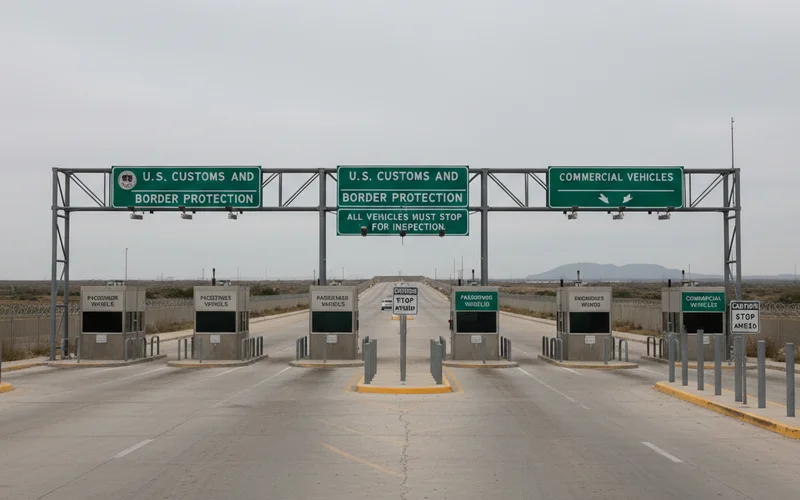
Border Patrol operates interior checkpoints on highways throughout Texas, including on major routes in and around Houston. At a checkpoint, you are legally required to stop. You are not required to answer questions about immigration status beyond confirming you are stopping. You may state: “I am exercising my right to remain silent.” DHS checkpoint authority applies within 100 miles of the border, which covers much of Texas including the entire Houston metro area.
Building an Emergency Family Plan Before an ICE Encounter
Every family with immigration vulnerabilities in Texas should have an emergency plan in place before an ICE encounter ever happens. An attorney review at our Houston office identifies risk levels, flags active detainers or removal orders you may not know about, prepares power of attorney documents for children’s care, and establishes an emergency contact protocol so family members know what to do within the first hour of a detention.
Know Your A-Number
Practical rule: Have an ICE emergency plan in place before you need it. Write down your A-number, your attorney’s phone number, and a trusted family contact. Store it somewhere your family can access if you are detained.
Your alien registration number, your A-number, is on any prior immigration documents you have received. Family members and attorneys need this number to locate you quickly after a detention. Write it down and store it somewhere your family can access. If you do not know your A-number, an attorney can locate it through your immigration history. Not having it adds hours to emergency detention response.
What to Do for Children If a Parent Is Detained
If a parent is detained during an ICE encounter in Texas, U.S. citizen children need to be accounted for immediately. Designate a trusted adult with temporary guardianship authority in advance. Execute a power of attorney document that authorizes that person to make decisions for your children while you are unavailable. Our Houston office prepares these documents as part of family emergency planning consultations. Do not leave this to chance.
Knowing Your A-Number Before an Encounter
Your alien registration number is on any immigration document you have ever received. Family members and attorneys need this number to locate you within hours of a detention, not days. Write it down. Store it somewhere your family can access without needing your phone or wallet. If you do not have it, an attorney can locate it through your immigration history. Not having it adds critical hours to emergency detention response when every hour matters.
How an Attorney Changes the Outcome After an ICE Encounter in Texas
The first 24 hours after an ICE encounter in Texas arrest determine whether emergency relief is possible. An attorney can file a motion to stay removal, request an emergency bond hearing, and begin building a deportation defense before you are transferred to a facility far from Houston. Every hour without representation is an hour the government uses to move the case forward without your input. If a family member has been detained, call (713) 974-8284 immediately. Do not wait until morning.
ICE Encounter Texas: Frequently Asked Questions
| Question | Answer |
|---|---|
| Do I have to open my door for ICE? | No, unless they have a judicial warrant signed by a federal judge with your address on it. An administrative I-200 warrant does not require you to open the door. |
| Do I have to answer ICE questions? | No. You have the right to remain silent. State that you are exercising that right and stop there. Do not answer questions about birthplace or immigration history. |
| What is the difference between an I-200 and a judicial warrant? | An I-200 is an administrative warrant issued by DHS, not a judge. It does not authorize entry into your home. A judicial warrant is signed by a federal judge and must name your specific address. |
| What should I do if a family member is detained? | Call an immigration attorney immediately. Do not wait. The first 24 hours determine whether emergency bond relief or a motion to stay removal is possible. |
| Can ICE arrest me at a Texas courthouse? | Yes. ICE has conducted courthouse arrests in Texas. Inform your attorney before any court appearance if you have immigration concerns. |
| Should I sign voluntary departure papers if asked? | Do not sign anything without attorney review first. Voluntary departure waives your right to contest removal and can affect future immigration options. |
| Does Texas law enforcement cooperate with ICE? | Yes, in most jurisdictions. Texas Senate Bill 4 prohibits sanctuary policies and most Texas agencies honor ICE detainers after a traffic stop or local arrest. |
| What is an A-number and why does it matter? | Your alien registration number identifies your immigration file. Family members and attorneys need it to locate you after a detention. Find it on any prior immigration document and store it somewhere accessible. |
Know What to Do Before ICE Shows Up at Your Door
An ICE encounter in Texas moves faster than most people expect. At Zavala Immigration Law Firm, we prepare families, handle emergency bond hearings, and fight deportation cases throughout Texas. Call (713) 974-8284 or reach us on our contact page at our Greenspoint or East Freeway Houston location.
About Attorney Eliud Zavala
Eliud Zavala is the founder of Zavala Immigration Law Firm in Houston, Texas. He immigrated with his mother and built his practice around the Houston immigrant community he grew up in. He handles family-based immigration, marriage green cards, provisional waivers, deportation defense, military parole in place, DACA renewals, and naturalization throughout Texas. He serves clients in English and Spanish at both the Greenspoint Park Drive and East Freeway Houston locations.